
Read More

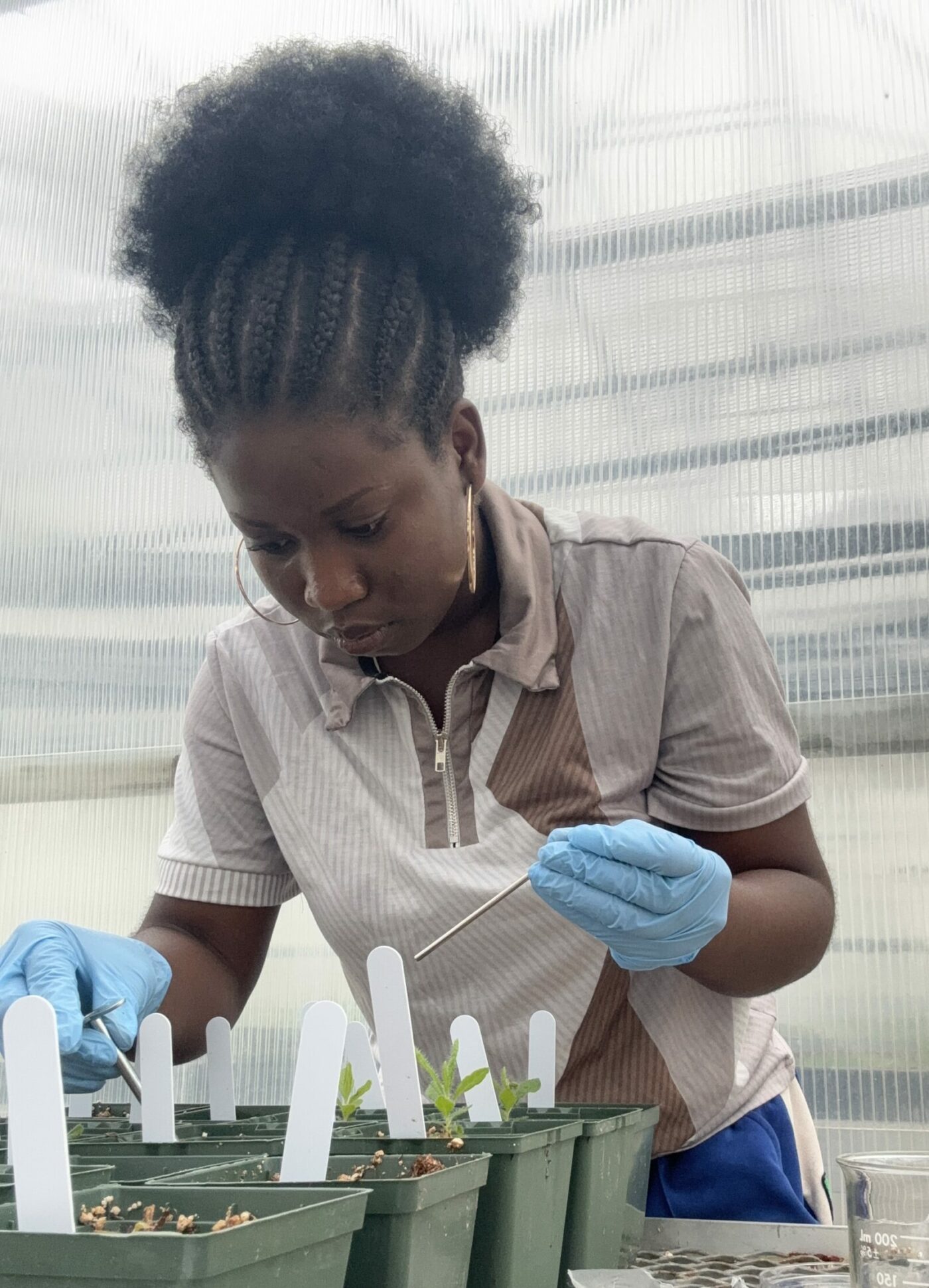
Abisola Folorunso Publishes New Research on Beneficial Soil Fungi in AoB PLANTS

The research, published in AoB PLANTS, investigates how beneficial Trichoderma fungi influence soil fungal communities and plant performance in Rhododendron species. The findings reveal that Trichoderma can reduce the relative abundance of pathogen-associated fungi while maintaining overall fungal community stability. Conducted under the mentorship of Dr. Jean Burns, the...

Read more

Read More

Accepted Manuscript: PhD Candidate Miranda Shetzer, BioScience Alliance Student and Former Ingalls Fellow, has a First-Author Paper in Press at AoB PLANTS

As a member of the Medeiros lab at Holden Arboretum, Miranda’s dissertation work focuses on understanding drivers of intraspecific variation in the context of environmental change. Shetzer et al. (in press) shows that Rhododendron minus plants growing in exposed, cold habitats of the Appalachian Mountains may benefit from higher...

Read more

Read More

Cleveland Collaboration: Local High Schooler and CWRU PhD Candidate Publish on Dung Beetle Ecology

A collaboration between CWRU PhD candidate Rachel Stone, and Hathaway Brown High School student Gabriella Joseph resulted in the publication of a scientific article "Whose poos do Northeastern Ohio dung beetles choose?" in The Coleopterists Bulletin. The study investigated the food preferences of Ohio's native dung beetles in forest habitats....

Read more

Read More

Saliha Ahmad Publishes Work on the Protective Benefits of Fungal Communities Against Root Rot Disease in Plants.

Phytophthora cinnamomi causes root rot in Rhododendron species, and it is crucial to study beneficial fungal species in the soil that can combat disease. PhD Student Saliha Ahmad worked on the soil fungal communities involved in suppression of the disease and the enhancement of plant survival. She found a...

Read more